




































How Difficult Is It To Operate A CNC Machine Without Experience?
Learn how hard CNC is without experience in a test lab. Key risks, required skills, common mistakes, and a 1–2 day training plan for repeatable tensile specimen preparation.
Providing empowering innovation through simplification
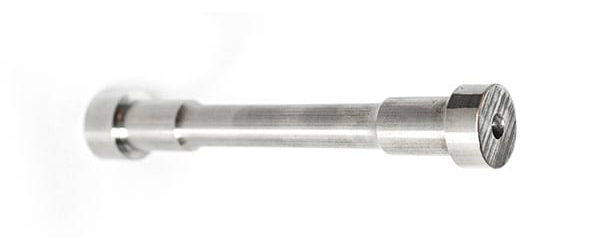
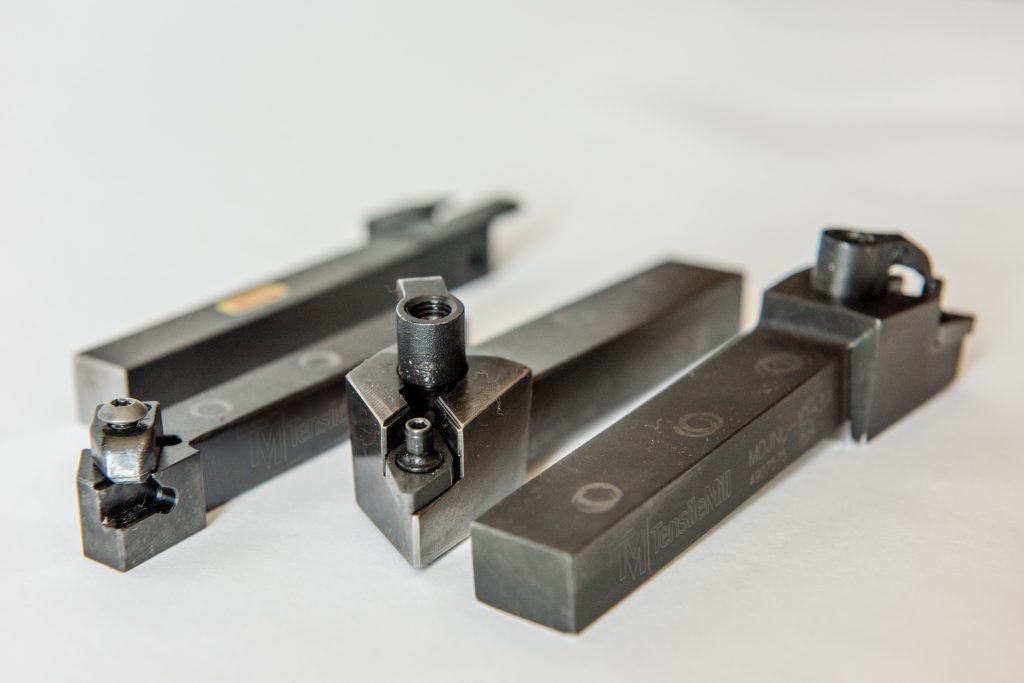
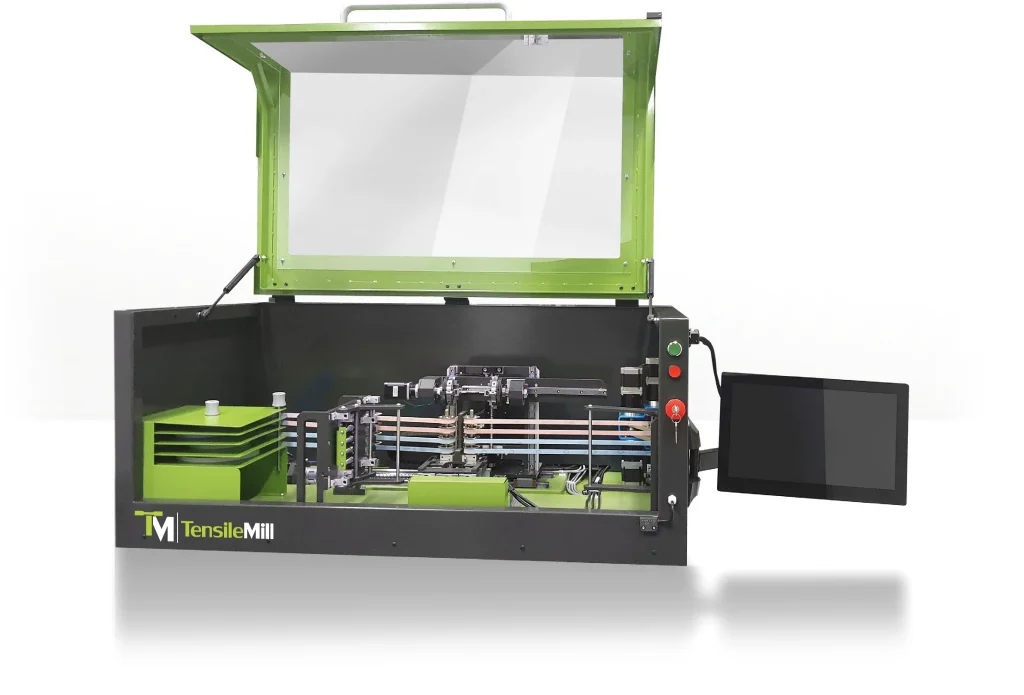
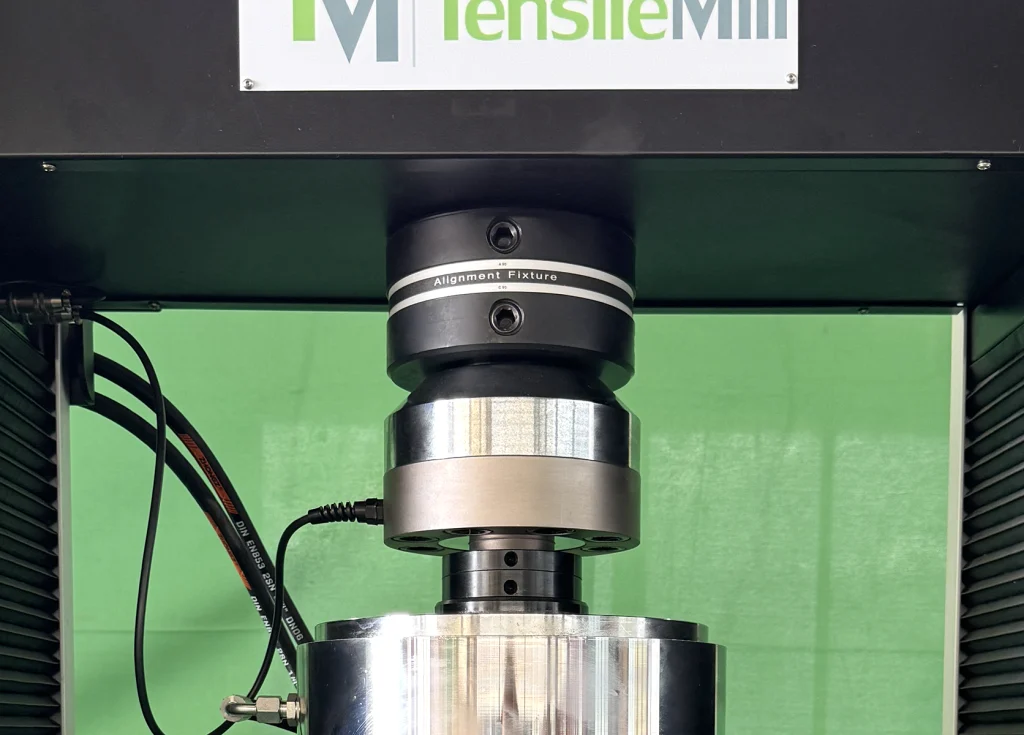
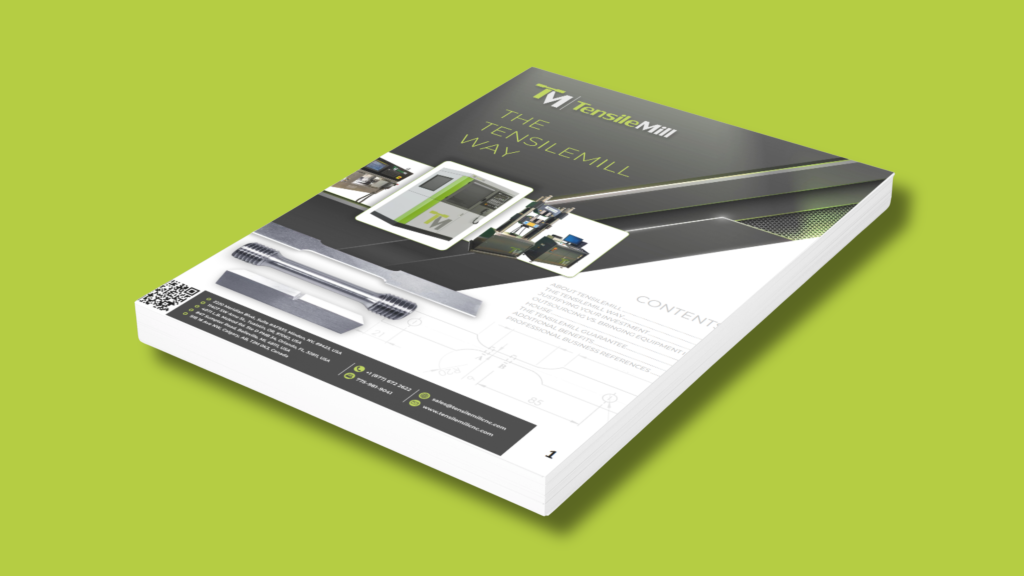
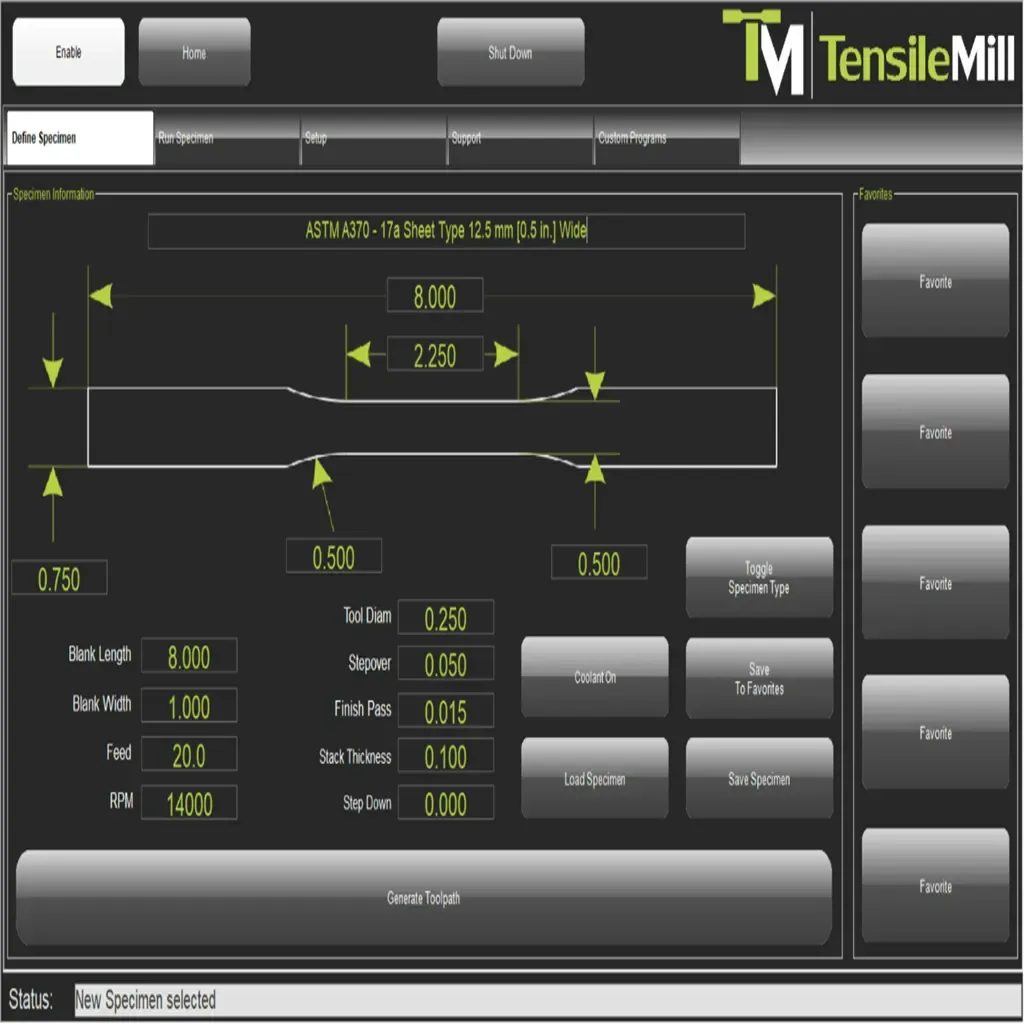
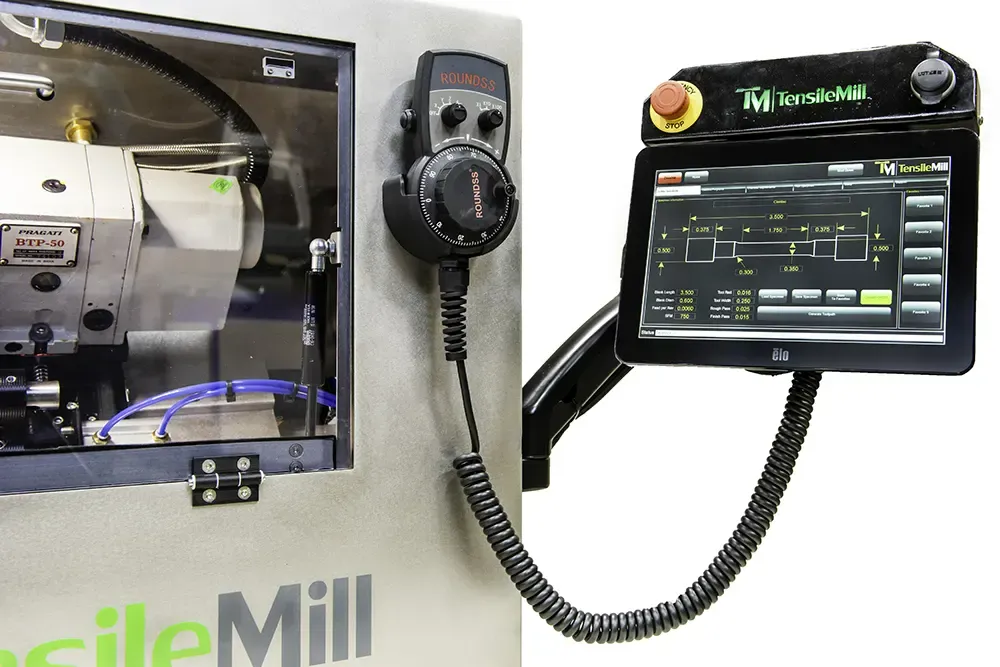
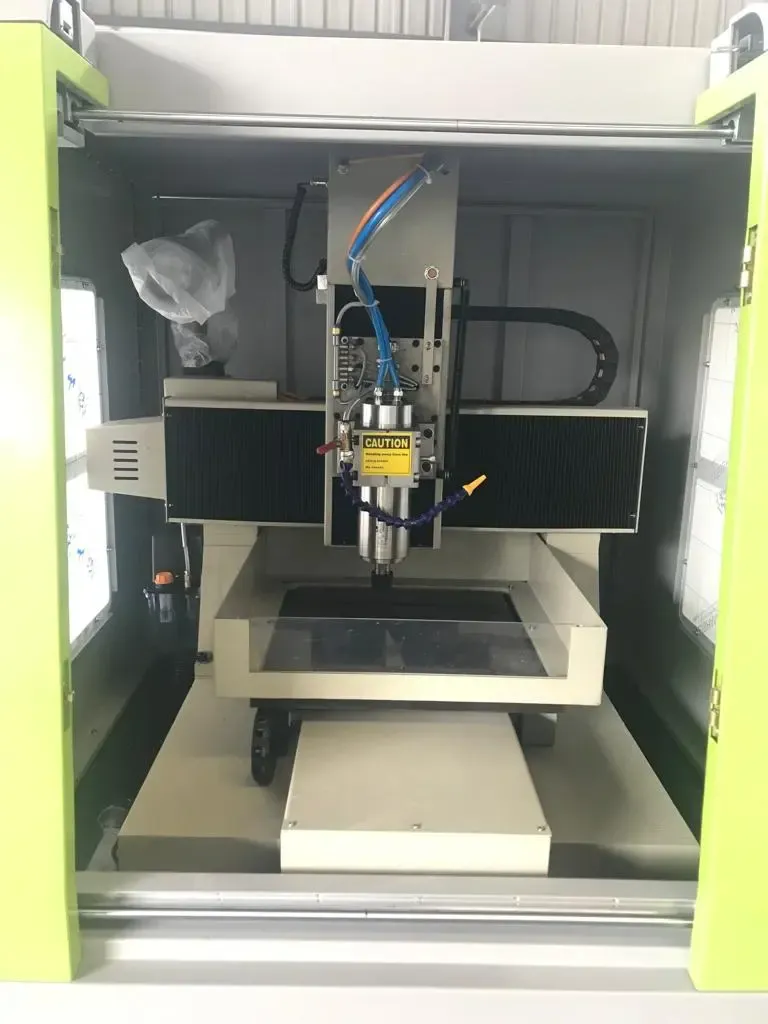
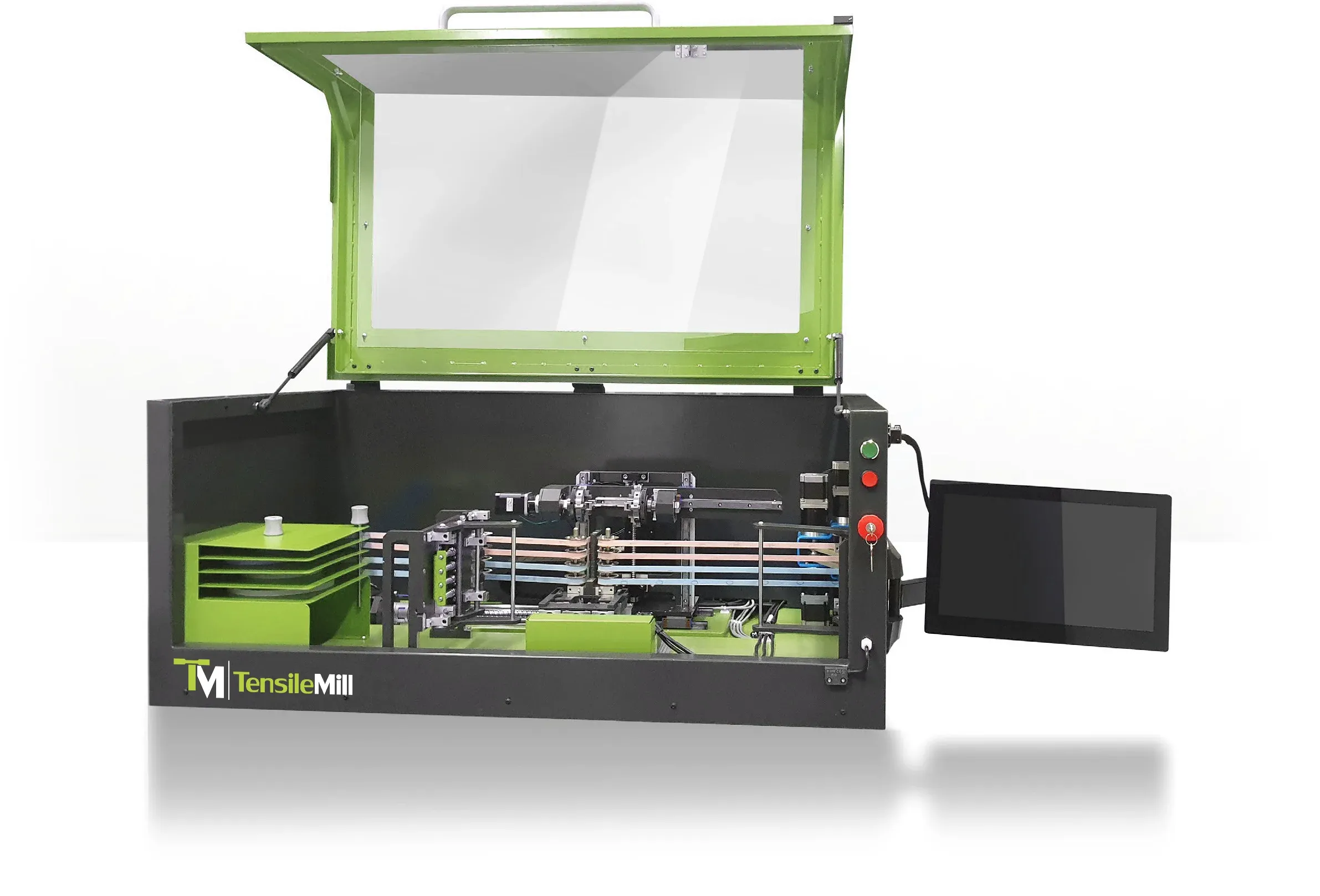
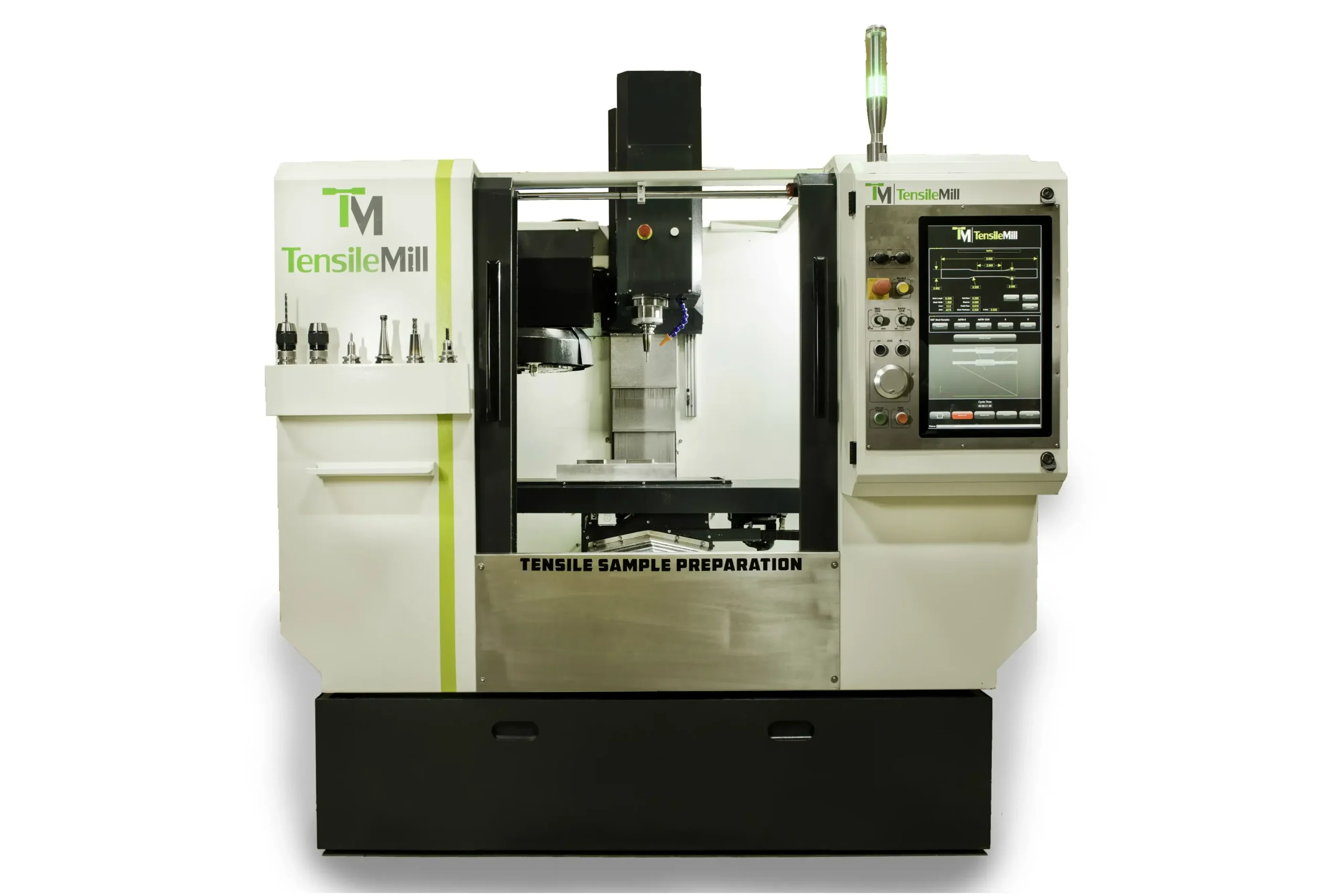
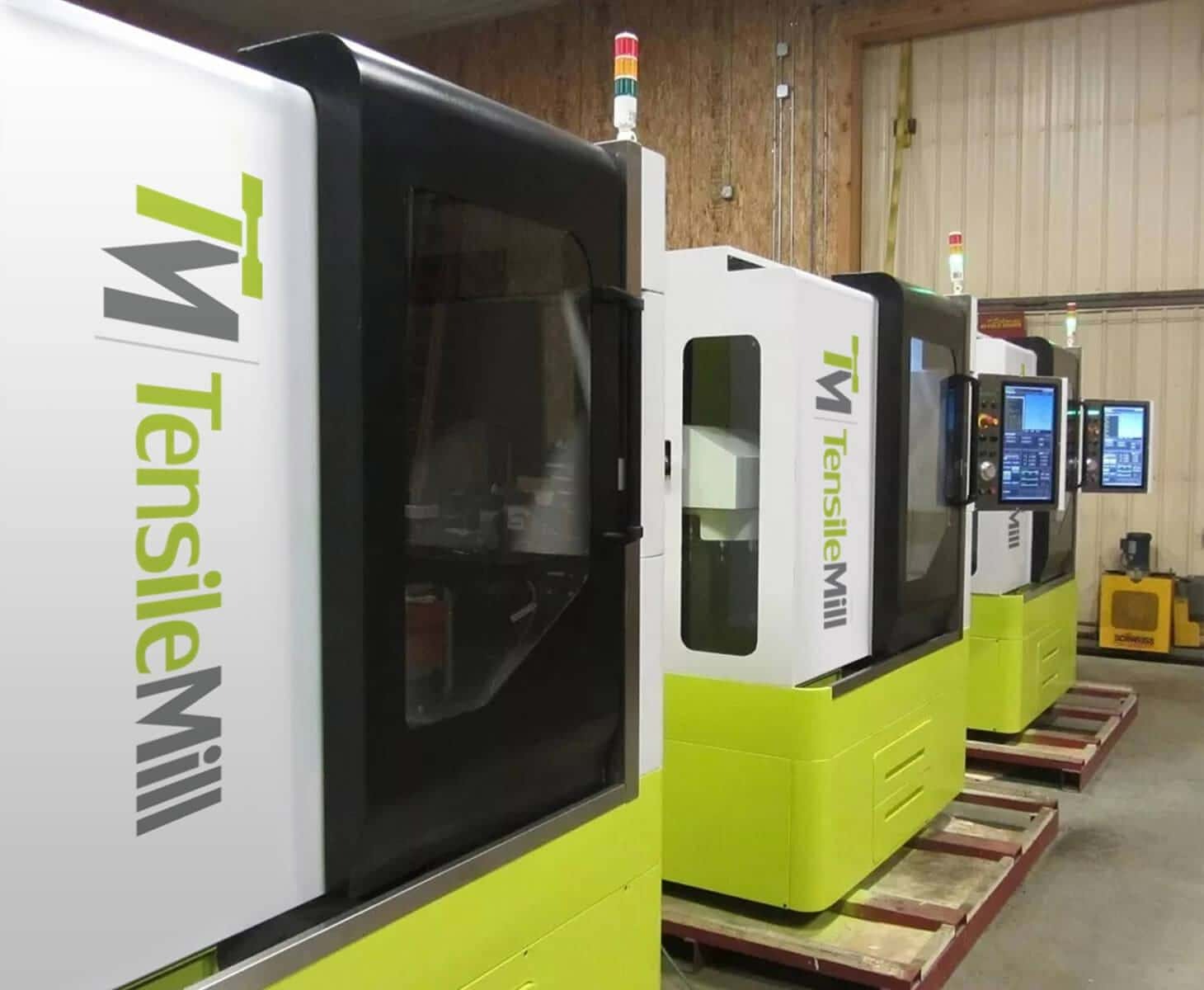
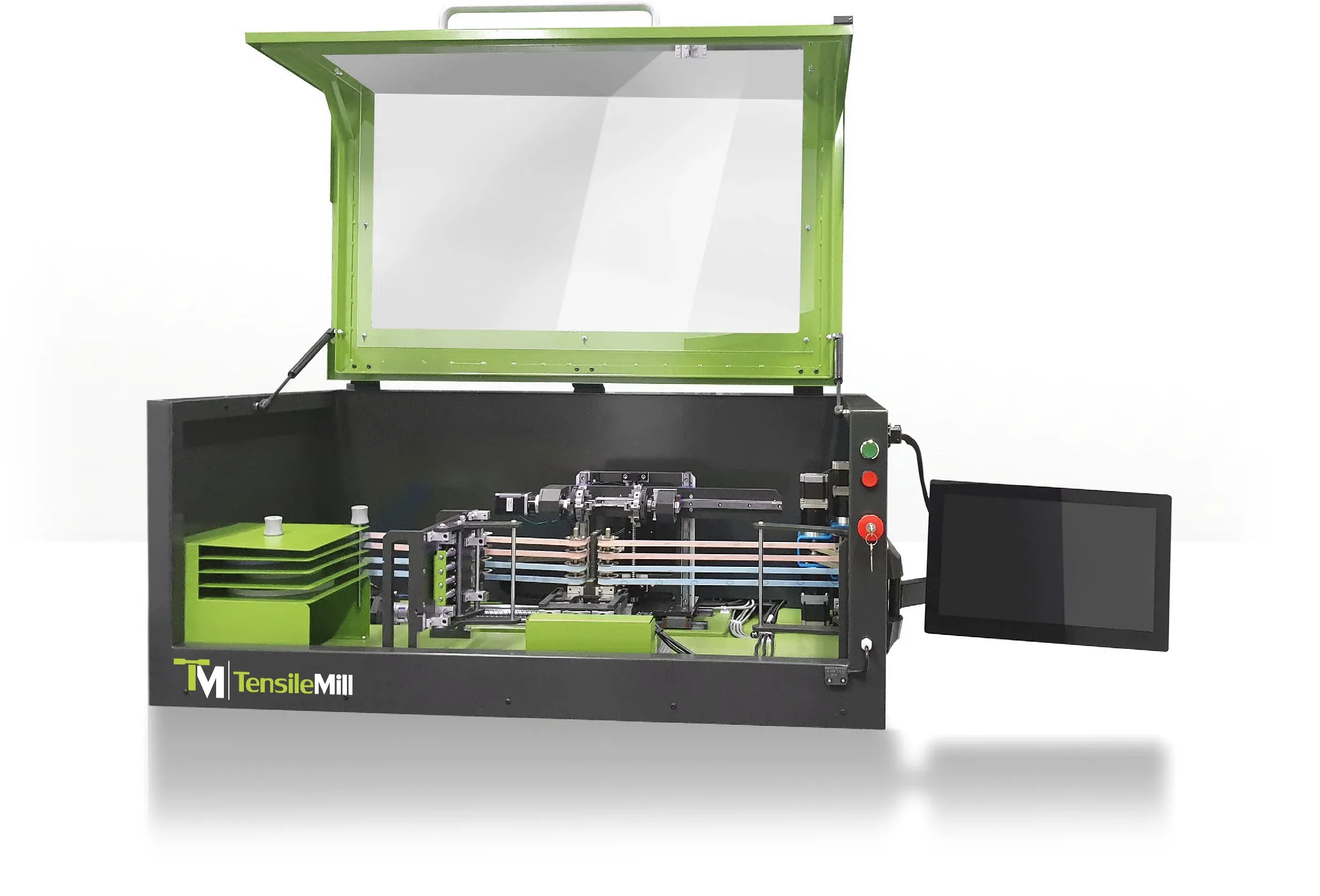
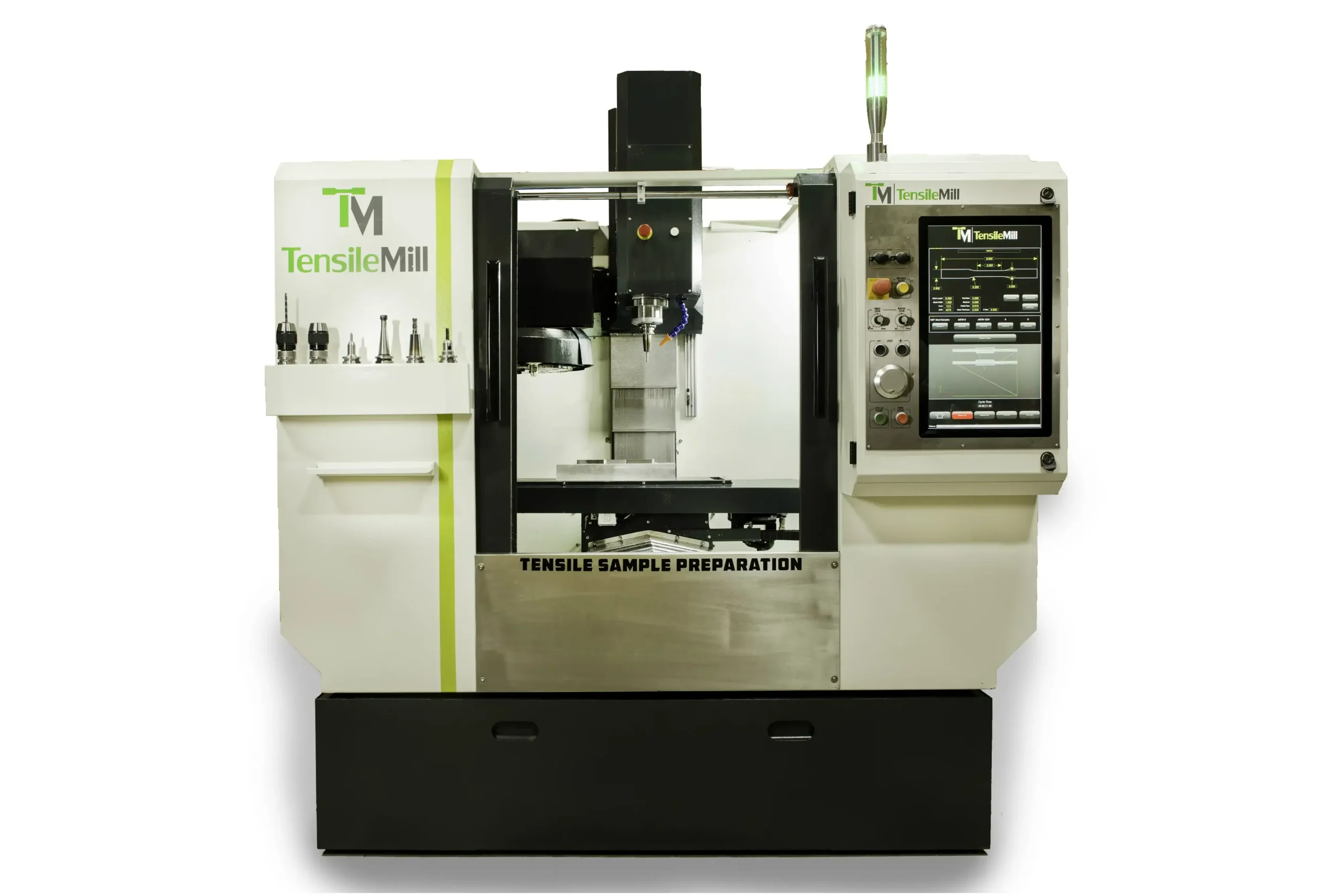
It is TensileMill’s mission to empower operators of any skill level to contribute to highest manufacturing testing standards from A to Z. As a result, TensileMill CNC Inc. offers the ultimate flat and round tensile sample preparation systems. Our compact, high speed, machining centers designed to prepare the highest quality flat and round tensile specimens. Equipped with our smart and user friendly tensile software interface, TensileSoft™, we make it easy for virtually any operator to control the machining process from start to finish with only a few buttons. Smart and easy tensile specimen machining is what we do! Our extensive Carbon Mach4 controller is also available for universal CNC machining applications. Let TensileMill CNC help you by providing the highest quality tensile sample preparation for the most accurate tensile material testing results.
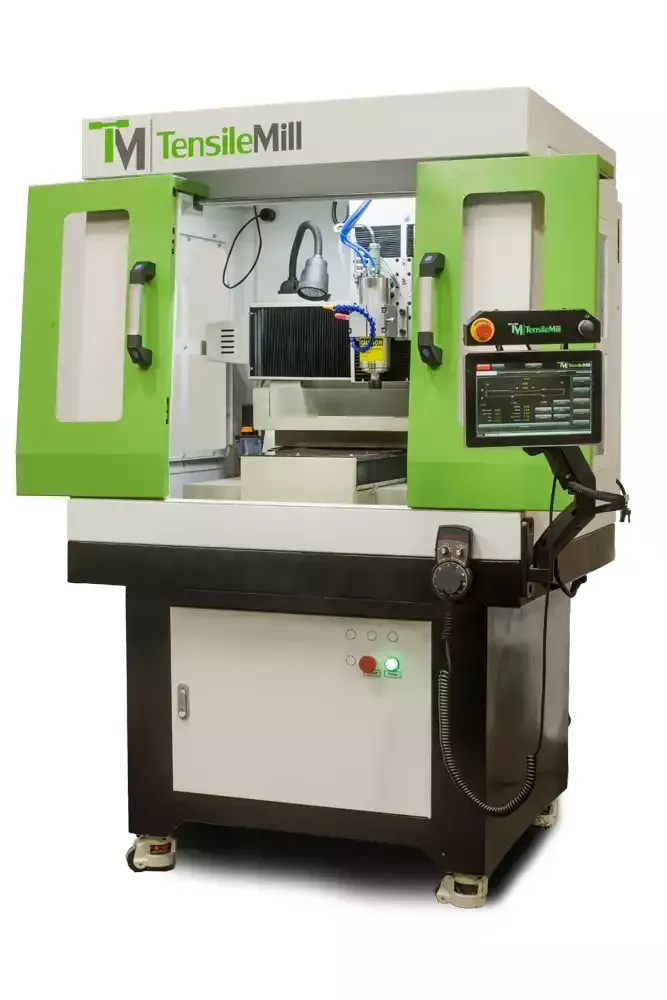
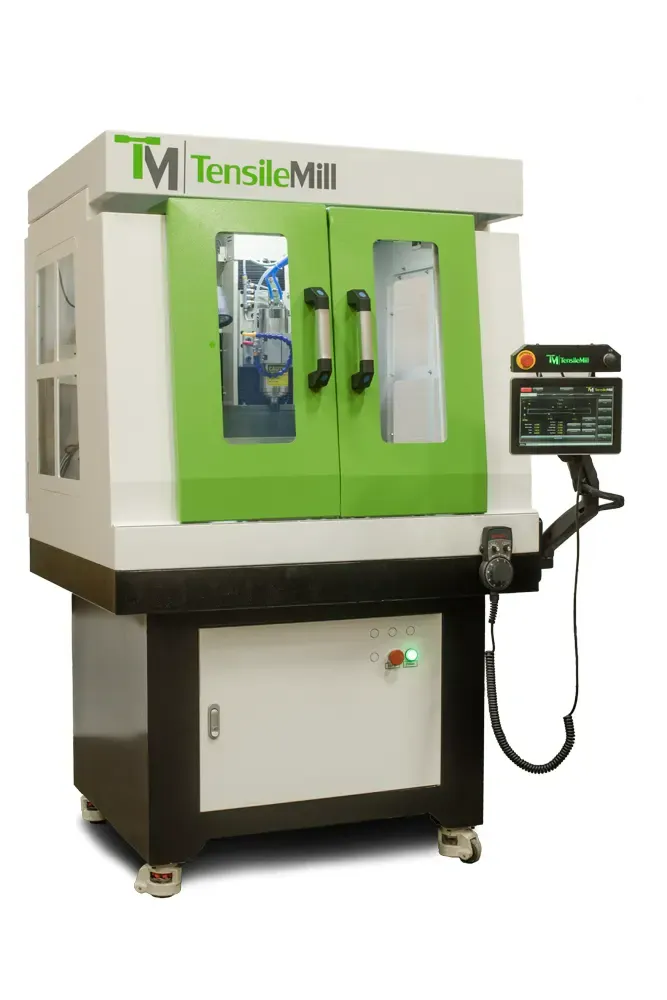
TENSILEMILL CNC – FLAT TENSILE SAMPLE PREPARATION
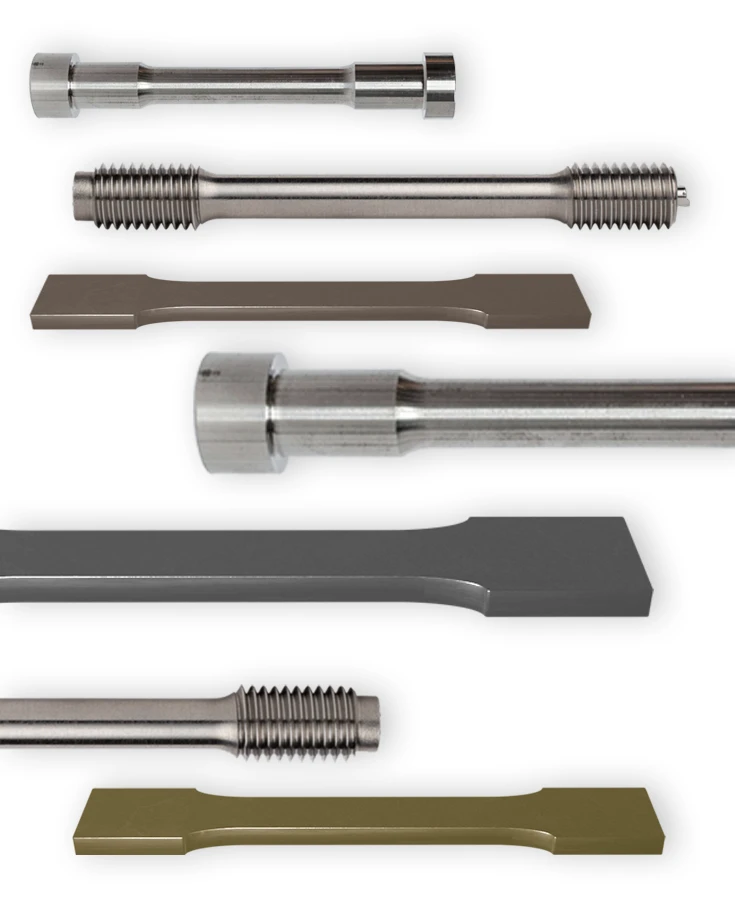
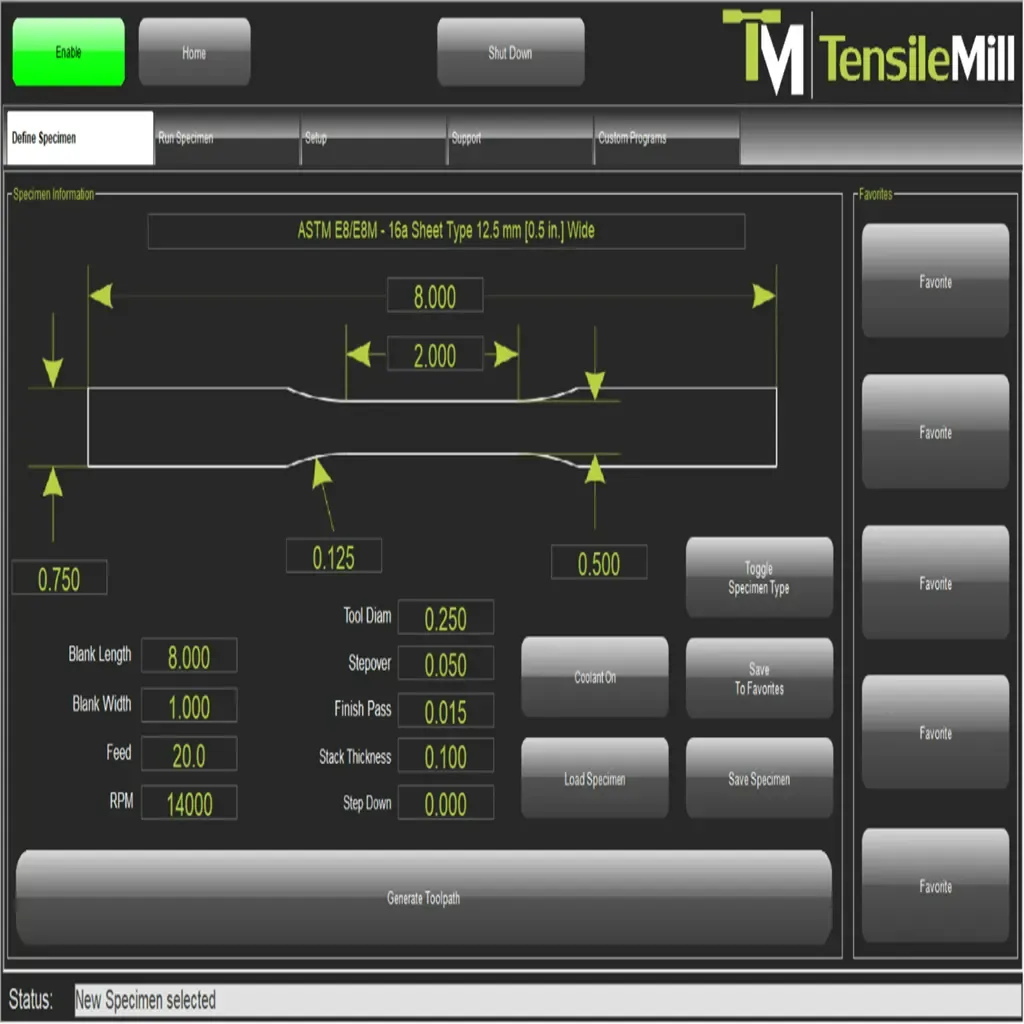
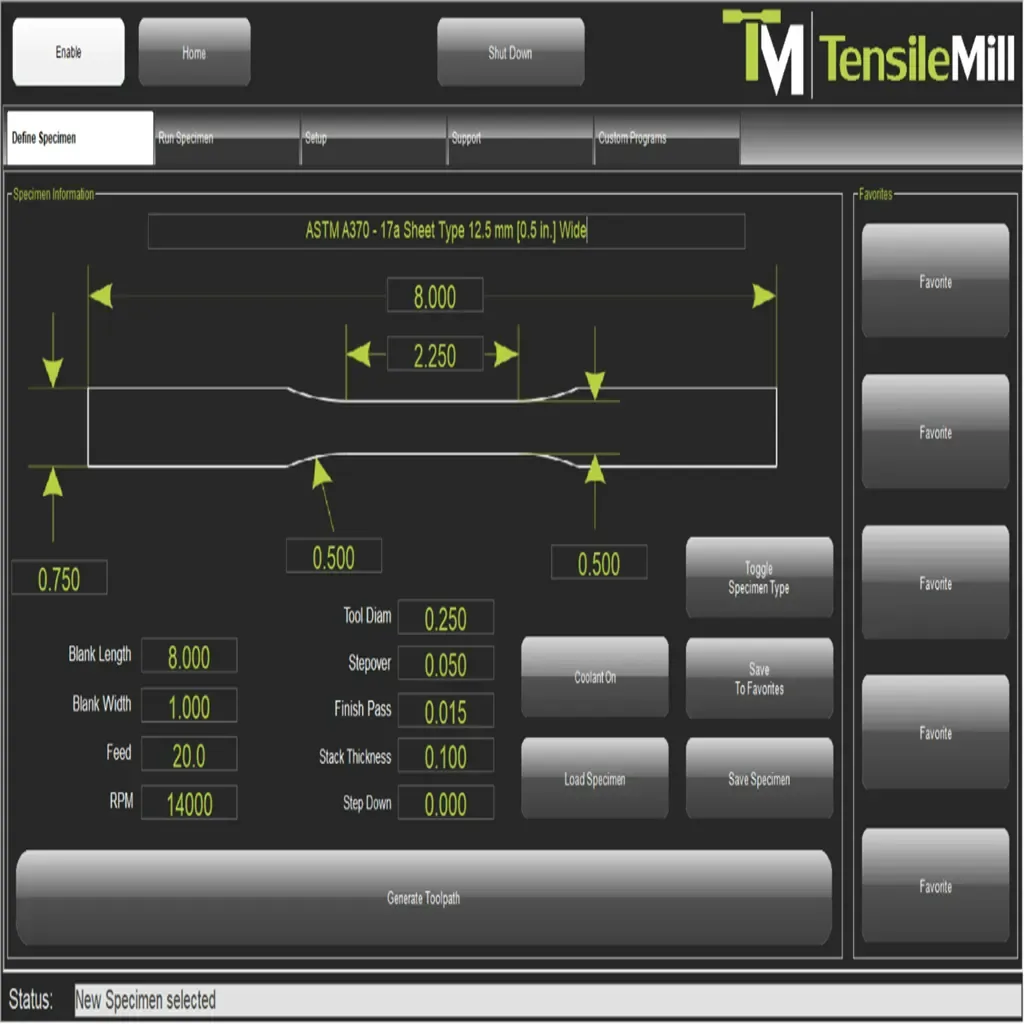
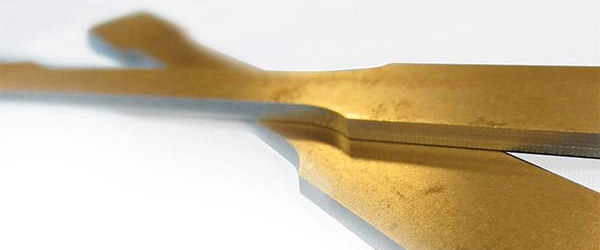
With TensileMill CNC, it has never been easier to prepare high quality flat tensile specimens. With no machining experience or software background, any operator can mount your specimen blanks, prepare the tensile specimen to your desired size and start the machining process. The tensile interface allows the operator to enter your desired tensile specimen size or to select a common size from our ASTM, ISO, DIN and JIS library. Stacking capabilities allow the TensileMill CNC to machine multiple specimens at one time for the quickest tensile test sample preparation in the industry. Imagine having the ability to do all these processes in house with a few pushes of button. That is what TensileMill CNC Inc. offers their customers. They offer a long-lasting, easy-to-use, and affordable industrial grade equipment for your in-house tensile test sample preparation needs.
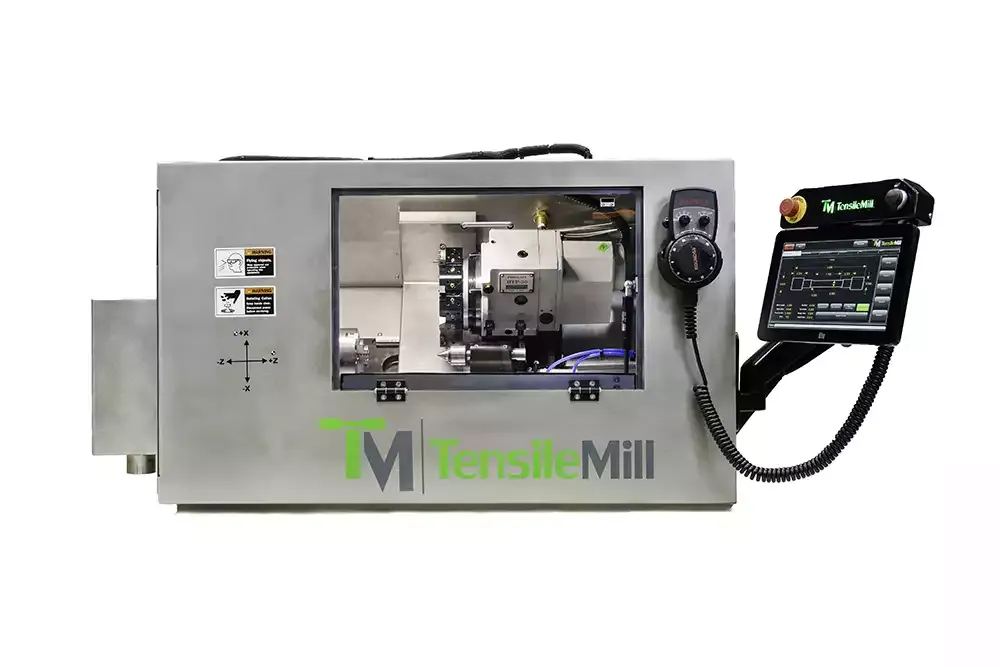
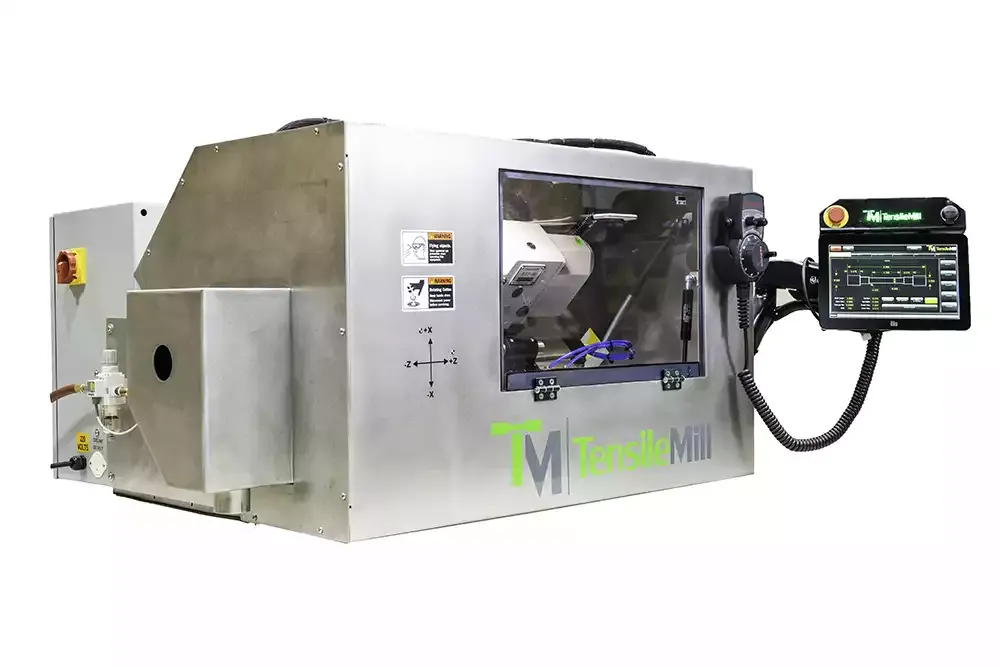
TENSILETURN CNC – ROUND TENSILE SAMPLE PREPARATION
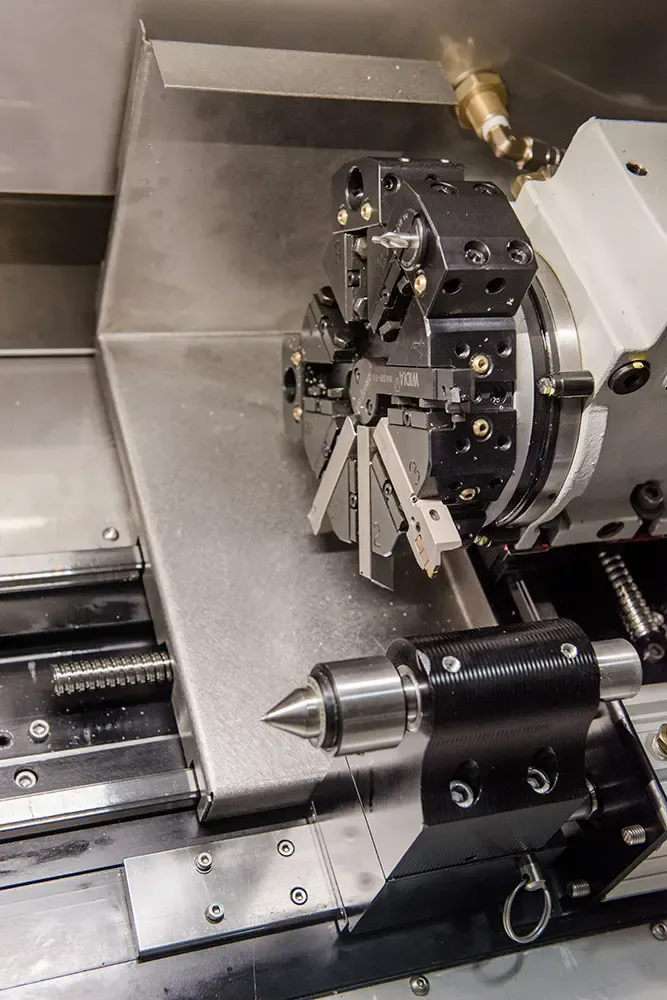
The TensileTurn CNC allows for simplified round tensile test sample preparation in seconds. The TensileTurn is a lab friendly solution for quickly and accurately preparing round tensile specimens from a variety of international standards. With our built in library of tensile specimens, you can select a common size from a list or enter your own parameters based on your own requirements. The tensile interface is loaded into your controller with our advanced Carbon Mach4 software for universal lathe applications. Providing you with the highest quality tensile samples, the TensileTurn is the ultimate solution in the industry for round tensile test sample preparation. The unparalleled value lies in the combination of high quality tensile specimen finish and the tremendous time savings achieved through the machine’s intuitive software. The equipment is designed to be operated by any level of engineer experience to achieve up-to industry standard tensile samples every time.
LIFETIME SOFTWARE UPDATES
TensileMill CNC supports all of our customers for as long as you own our tensile sample preparation equipment! We are constantly updating and upgrading our software packages and are happy to share it with all existing machines in the industry. Through our remote access, we can control your controller and update you to the newest software.
Contact us today to make sure you are running the newest and greatest TensileMill CNC software packages. Customer software developments are also available to meet your unique needs. This allows you to use the TensileMill CNC product line as a hybrid unit, delivering both tensile preparation and advanced CNC machining capabilities.
WARRANTY AND SUPPORT
TensileMill CNC is happy to offer a 12-month warranty on all of our equipment from the date that our equipment arrives at your facility. We are happy to support the equipment from top to bottom with the exception of consumables. Our tensile test sample preparation equipment is also included in our lifetime consultation advantage. We are happy to provide you with any ongoing support and any specific technical requirement consultations to make sure you have the most rewarding experience with your tensile sample preparation equipment provider.
Extended warranty packages are available. TensileMill CNC Inc. does not use proprietary parts in the manufacturing processes. This allows us to partner with thousands of CNC shops in North America and worldwide and offer virtually instant technical support. Our partnership machine shops will be glad to drop by, assess the situation and offer the optimal solution.
TensileMill’s empowers operators of any skill level to contribute to highest manufacturing testing standards from A to Z. This is the reason why thousands of manufacturers, educational facilities, government bodies, NDT facilities, laboratories choose us.

Confused?
Contact one of our technical specialists today for a free consultation on how TensileMill CNC can help you!
We provide the latest information about building from around the world. Don’t miss it!
Learn how hard CNC is without experience in a test lab. Key risks, required skills, common mistakes, and a 1–2 day training plan for repeatable tensile specimen preparation.
Quantify the cost of poor specimen preparation in tensile testing. Learn how prep errors drive retests, scrap, and delays, and use a simple calculator to estimate monthly losses.
How often should a Universal Testing Machine be calibrated? Learn common intervals, ASTM E4 and ISO 7500-1 basics, what triggers unscheduled recalibration, and how to keep audit-ready records

Start with the form of your incoming material and the standard you must follow. Sheet and plate programs, and plastics dumbbells to ASTM D638, are usually best prepared on a flat-specimen machining system. Bar, rod, and forged stock governed by ASTM E8 or ISO 6892-1 often point to round-specimen lathes, especially when gauge sections must be concentric and free of tool marks. Match geometry, size range, and required tolerances. Typical flat coupons span about 0.25 to 1.00 in (6 to 25 mm) gauge width and 0.02 to 0.50 in (0.5 to 12.7 mm) thickness. Round specimens commonly run 0.125 to 1.00 in (3 to 25 mm) gauge diameter. Many labs target dimensional tolerances of ±0.002 in (±0.05 mm) and a surface finish near 32 to 63 µin Ra (0.8 to 1.6 µm) to reduce stress risers. Consider throughput and workflow. Flat systems can fixture multiple blanks for batch cutting, which suits high mix, moderate volume. Round systems with programmable cycles excel for repeated diameters and longer gauge sections such as 2.00 in (50 mm) gauge length or 4D rules. Also verify downstream compatibility, for example wedge or serrated grips for flats, and collets or threaded ends for rounds on your UTM, and whether your polishing step is longitudinal or circumferential. When in doubt, map your most common part families, smallest and largest sizes, and the governing clause of the standard, then select the machine that meets those boundaries with margin. If you would like to discuss your testing requirements, you can connect with our team on the Contact Us page for guidance tailored to your workflow.
Start with the materials and standards your lab must support. Metals commonly follow ASTM E8/E8M, plastics often follow ASTM D638 or ISO 527. Confirm specimen geometry first, such as flat dog-bone, subsize, or round bar, since that determines whether a CNC milling machine, a CNC lathe, or both are needed. For consistent strain distribution, many labs target width tolerance within ±0.002 in (±0.05 mm) and surface roughness near 32 µin Ra (0.8 µm) after machining and polishing. Match capacity and accuracy to throughput goals. A practical work envelope for flat workholding is around 12 in × 24 in (305 mm × 610 mm). Typical spindle power for flat machining ranges from 2 to 5 hp (1.5 to 3.7 kW). For round specimens, look for chucking up to about 1.0 in (25 mm) diameter and 12 in (305 mm) length, with machine repeatability near ±0.0005 in (±0.013 mm). If operators run mixed alloys, prioritize recipe control, fixture quick-change, and safe chip or dust extraction. Plan the finishing and testing steps. Longitudinal polishing equipment helps achieve uniform surface finish that supports valid tensile results, and it reduces the risk of edge artifacts. Verify that shoulder dimensions or threaded ends will seat correctly in your UTM grips, for example wedge or threaded grips rated for the expected load such as 11,200 lbf (50 kN). Aligning machining, polishing, and gripping from the start prevents specimen rework and improves first-pass yield. If you would like to discuss your testing requirements, you can connect with our team on the Contact Us page.
Start with incoming material form and the governing test method. Flat CNC systems best suit sheet, plate, and strip in the 0.02–1.00 in (0.5–25.4 mm) thickness range, delivering dog-bone profiles for methods such as ASTM D638 or ISO 527. Lathe-based round systems excel on bar and rod stock around 0.25–2.00 in (6–50 mm) diameter, supporting metallic coupons for ASTM E8 when a turned gauge section is specified. Match the specimen geometry to your grips and alignment practices. Wedge or serrated grips favor flat coupons, while collet or threaded-end setups favor round. Many metallic procedures call for a 2.00 in (50 mm) gauge length; plastics often use the same nominal length. Verify required tolerances in the standard, then size the machine to hold typical coupon width and thickness within about ±0.002 in (±0.05 mm) and to blend fillet radii smoothly, for example near 0.50 in (12.7 mm) where applicable. Consider throughput, surface quality, and operator workflow. For high volume, look for quick-change fixturing, repeatable locating, and tool libraries that maintain profiles across materials from 40–300 HB (≈ 430–3,000 MPa UTS). Aim for a final surface near 63 µin Ra (1.6 µm Ra) or better on metals, remove burrs to roughly a 0.005 in (0.13 mm) edge radius, and use stable coolant delivery so heat does not distort the gauge section. If specimens require longitudinal polishing, plan capacity for repeatable passes and consistent media tracking. If you would like to discuss your testing requirements, you can reach our team on the Contact Us page for friendly guidance on next steps.
Integration starts with producing specimens that meet geometry and finish targets the UTM expects. For metals to ASTM E8, typical dog-bone flats hold gauge width within ±0.001 in (±0.025 mm), gauge length of 2.0 in (50 mm), edge radii of 0.125 to 0.250 in (3.2 to 6.4 mm), and surface finish of 16 to 32 µin Ra (0.4 to 0.8 µm). For plastics to ISO 527 or ASTM D638, consistent gauge thickness and a 2.0 in (50 mm) gauge length improve strain uniformity. Round E8 specimens benefit from concentricity within 0.002 in TIR (0.05 mm) and blends free of toolmarks. For additional guidance, you can connect with our team on the Contact Us page to review options that fit your testing workflow on the page.
Start with your material form and the target geometry required by your test method. Flat preparation is ideal for sheet, plate, or molded panels, commonly used for ASTM E8 metals or ISO 527 plastics. Typical flat dog-bone sizes include 0.25 to 1.00 in (6 to 25 mm) gauge width with 1.00 to 2.00 in (25 to 50 mm) gauge length and 0.125 in (3.2 mm) fillet radii. Round preparation suits bar, rod, wire, or cast buttons, with frequent sizes of 0.250 to 0.500 in (6 to 13 mm) diameter and 2.00 to 4.00 in (50 to 100 mm) gauge length. Target tolerances often hold ±0.001 in (±0.025 mm) in the gauge section and 0.001 in TIR (0.025 mm) concentricity for round specimens. Consider throughput and handling. For high coupon volumes across multiple alloys, a fixtured flat CNC system supports repeatable nesting and quick changeovers. For rounds, a programmable lathe-style machine with tailstock support and center drilling maintains straightness on longer pieces, for example 6 to 12 in (152 to 305 mm) overall length, while flood or mist coolant protects both metals and polymers. Confirm UTM and grip compatibility early. Flats pair well with wedge or pneumatic grips using 1 to 2 in (25 to 50 mm) jaw widths. Rounds may require collets, shoulders, or threaded ends such as 0.500-20 UNF, with shoulder perpendicularity within 0.002 in (0.05 mm). Surface finish affects results, so polish the gauge section longitudinally to Ra ≤ 32 µin (0.8 µm), or to 16 µin (0.4 µm) for notch-sensitive materials, and verify dimensions against the selected standard during first-article inspection. If you are comparing flat and round preparation solutions, you can explore the TensileMill CNC Homepage to review product families on the page.
Test answer
Test answer